
Good day, dear readers! I hope this late April morning finds you in good health. I’ve been pondering angst lately, and what it means to different people. If you spend any time in the JAFF community, you’ll notice something quickly: we all seem to define angst a little differently.
What one reader calls “delicious tension,” another calls “too stressful.” What one writer considers a gentle emotional arc, another reader experiences as deeply angsty. It is not a fixed scale, and perhaps that is part of what makes writing in this space both rewarding—and occasionally perplexing.
I have written stories I would confidently describe as medium to low angst, only to have readers respond that they found them highly emotional, even ‘super angsty’. That disconnect has made me pause more than once and ask: Where exactly are the angst lines we are trying not to cross?
Why Readers Turn to Low-Angst JAFF
For many, Pride and Prejudice variations are a form of comfort reading. Readers come to these stories with a certain expectation—not only of a beloved pairing, but of emotional safety. They know Elizabeth and Darcy will find their way to one another. The question is not if, but how.
Low-angst JAFF, in particular, offers:
- A sense of stability in an uncertain world
- Emotional payoff without prolonged distress
- Familiar characters navigating conflict without losing themselves
- Guaranteed HEA for our hero and heroine
That does not mean readers want no tension. In fact, a story without conflict rarely satisfies. But there is a difference between tension that engages and distress that overwhelms.
Tension vs. Distress
This distinction feels subtle when writing, but it is often very clear when reading.
Tension invites the reader forward.
It creates anticipation, curiosity, and emotional investment. It might include misunderstandings, social obstacles, or internal hesitation—but the reader trusts that the story will resolve in a satisfying way.
Distress, on the other hand, can push the reader away.
It often lingers too long in uncertainty or places characters in situations that feel emotionally unsafe or difficult to recover from. The promise of a happy ending may still exist, but the path becomes uncomfortable enough that some readers disengage.
The challenge is that the line between the two is not universal.
A broken engagement, a public humiliation, a serious illness—any of these may feel like reasonable stakes to one reader and excessive angst to another.
Writing with Restraint (Without Losing Stakes)
In a genre that thrives on emotional connection, removing conflict entirely is not the answer. Instead, the goal becomes one of balance. How can I craft a story that feels ‘true to life’ that does not cross that angst-line?
Some approaches that tend to keep a story within the “low-angst” space include:
- Shortening the duration of distress
Difficult moments may occur, but they do not dominate the narrative. I do this a lot. If there’s a point of the story that is unhappy, I try to get through it as quickly as possible. Elizabeth married to Damien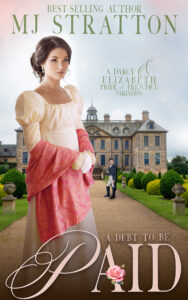 Fiennes? Let’s kill him quickly. Darcy imprisoned? Let’s not go into too much detail about those miserable years.
 - Maintaining character integrity
Elizabeth remains perceptive and grounded. Darcy remains honorable, even when flawed. Readers are less likely to feel distress when the characters themselves feel steady. The characters can be different and still be very much the people we love. Elizabeth might be more cautious about love while still having those core traits. - Providing emotional relief along the way
Lightness, humor, or moments of connection can offset tension and remind the reader of the story’s underlying warmth. I love when Darcy is tender and sweet, especially if Elizabeth is struggling. - Avoiding irreversible harm
Situations that permanently damage relationships or reputations tend to shift a story into higher-angst territory, even if the ending is ultimately happy.
Even with these in place, however, interpretation still varies.
When “Low Angst” Isn’t Received That Way
This is where I find the conversation most interesting.
As writers, we may approach a story with a clear intention: to create something gentle, comforting, and emotionally satisfying without pushing too far into distress. And yet, readers bring their own experiences, preferences, and sensitivities to the page.
A scene that feels like mild tension to one person may resonate much more deeply with another. A conflict that seems quickly resolved to the writer may linger in the reader’s mind.
It raises an important question—not just about craft, but about audience:
Is “low angst” something we define as writers, or something readers ultimately decide?
Perhaps the answer lies somewhere in between.
So Where Is the Line?
That is the question I keep returning to—and the one I would love to open to discussion.
Because in a genre built on shared characters and shared expectations, understanding those lines matters. Not to limit creativity, but to better understand the reading experience we are trying to create.
So I am curious:
What feels like “too much” angst to you in JAFF?
Is it a particular type of conflict? A certain length of separation? A moment that crosses from tension into discomfort?
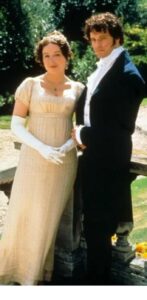
Or is it something less tangible—a feeling that the story has strayed too far from the comfort you were hoping to find? Perhaps as long as our dear couple gets their happy ending, it doesn’t matter.
I would love to hear your thoughts in the comments!
Have a happy weekend,
MJ Stratton

31 comments
Skip to comment form
Interesting topic. I suspect there is no answer. Each reader brings a different background/environment to a story.
For me, if I’m looking for low angst to just relax, usually I’ll pick a shorter book to read. The longer a stressful situation (in the book) takes to resolve, the more I have to be in the mood. If I’m feeling more energetic I’ll go for a more complex longer story. My attitude isn’t constant and neither are my reading choices.
Author
When I know a book has angst, I usually try to read it in one sitting. That helps me. And after getting through the comments on this post, I am inclined to believe your view. The book truly is different for every reader, I think. Every person who turns the pages has a completely unique experience.
What an interesting discussion! And a revelatory look into the writing process.
I personally tend to shy away from plots that require one of the characters to be fooled or operate under a misconception leading to public humiliation. It’s probably my own baggage, of course, but that’s the kind of stories that I enjoy less. I don’t mind angst in general and think tougher stories can end with bigger emotional rewards, but being lied to or fooled, even inadvertently or with good intentions, not so much. I end up waiting for the truth to come out and can’t enjoy the story.
Author
I struggle with second hand embarrassment SO much. I agree with you there.
I doubt that my answer will provide illumination because, for me, the answer is “it depends” on how I am feeling on the day I read the book. I have even experienced widely divergent views of the same book on a second reading. That said, I do have some themes that cause me to avoid a book. They include multiple descriptions or multiple instances of physical abuse of a main character (one that’s not too explicit is usually not a problem), extreme, continuous emotional abuse of a main character, even extreme versions of familiar events and relationships from P&P. I also tend to skip books that have no misunderstandings, conflict, or demonstrable emotional growth; that’s just too much treacle. Overall I enjoy many different styles, from different storylines of the period to magic, fantasy, and sci-fi. It all depends on what is happening in my life the day I read a book.
Author
Great insights. I try not to be explicit when handling hard topics. Reading about them can be so hard on me emotionally. And I agree. My preferences shift based on how I am feeling that day.
I’m certainly not an angst lover but my tolerance depends on circumstances. Sometimes my health problems mean I really can’t deal with a lot of angst. But I find I can deal better with angst if it isn’t between ODC, I much prefer to read of them as a couple dealing with angst from someone else. I’m no longer inclined to read about endless misunderstandings and stubbornness between Darcy and Elizabeth so try to avoid those books.
Author
I’ve always said, if people just communicated, we would have no stories to tell. But I dislike endless misunderstandings, too.
I totally agree. JAFF is what I read on my tablet. It’s usually brain candy for me. I save my book reading for lengthy histories and historical novels and mysteries. I want ODC to be in character and to demonstrate growth as epitomized by Austen. I stick to stories set in the Regency, no sci- fi, fantasy, or magic.
as long as Mary Bennet and the colonel end up married I dont care
Author
A pairing I haven’t played with yet, but hope to in the future!
I love your attempt to distinguish between tension and angst. For me, stories in which Darcy or Elizabeth are suffering or in more than the usual peril (e.g. getting captured in France vs. the usually hapless Wickham kidnapping Elizabeth for 10 seconds) are high angst. If a minor character is in peril, I can usually handle it. I’m drawn to the tension in forced marriage stories, but when Darcy disappears or sends Elizabeth away, the tension becomes high angst.
Author
That’s a good point. Like in A Wilful Misunderstanding (one of my personal favorites). That book is definitely high angst. But it was SO well done.
That’s a really interesting article. Thanks. I wonder if the line between too much or too little angst also varies , not just from.person to person, but day to day. Maybe someone who’s going through a bad time would find every bit of angst magnified in their perception, whereas they might know it wouldn’t normally upset them.
I’ve seen a couple of examples of that.
So perhaps the answer to your question doesn’t, and can’t, exist, because it’s too variable, personal, and individual.
Just food for thought!
And maybe it’s also to do with each individual’s ability to suspend disbelief- also very variable.
Keep writing anyway, please!!
And have a good weekend
Kate.
(And I know, I shouldn’t start a sentence with And.!!)
Author
Perfect summation, Kate. I think that’s why I lean toward writing something I would want to read. I can’t please everyone, so may as well please myself.
MJ, thanks for this thought-provoking post! As both an author and a reader, I’ve thought a good bit about this question — and certainly experienced that disconnect between what I thought was low angst and what others see as quite angsty!
Since angst is, by dictionary definition, a feeling of fear or insecurity, I once allowed myself to believe that any P&P variation signaling E&D’s eventual pairing couldn’t truly be angst — because whatever temporary feeling of anxiety I might feel as I read, I know (as a romance reader) that Elizabeth and Darcy will end up together.
What I’ve come to learn as an author is that how they end up together matters much more for the definition of angst! 🙂 And though I’m the least angsty person you’ll ever meet, I suppose I write higher-angst novels! (That’s actually not my intention, but there you go!)
Low angst or high angst — we’re lucky to have so many storytelling options out there! I’m grateful to you, MJ, for the stories you bring into the world! It’s clear you bring great joy to your readers!
Author
Thank you, Christina!
I feel the same. I’ll write a book that I say is low angst and people are like, “Nope, that was SO angsty!” Usually if there is angst in what I write, like Damien Fiennes in A Debt to be Paid, I want Darcy to have less pride and arrogance to balance it out. I love giving ODC their page time, too. And isn’t it funny how our novels shape themselves? I am also not an angsty person. I am flat out non confrontational most of the time. But I’ve certainly written some angsty stories!
Like others sometimes it depends on my mood or what is going on in my life at that moment. But for me in general, when it goes from tension/conflict to discomfort or depressing. One of the many reasons I love to read is to for a time take myself away from a depressing, stressful, or distressing life situation/problem to keep my sanity and relieve the stress a little, hoping that the outcome in the book will be a satisfying one because real life doesn’t always give us those or a HEA. To be able to lose myself in the lives of our “friends”. Right now for me this is especially true. But depending on someone’s personal experiences certain topics or levels of angst can be triggers or too much for them as someone else may be fine with it because they didn’t have the same life experiences. I have even found that sometimes a book I read years ago in a younger version of me, rereading today I have a different opinion or interest in it (good or bad).
Author
Love this evaluation. I feel the same way. And I totally get how life shapes our definition. I write what I know, and sometimes that can be a trigger for others who may be in a situation that is similar.
I usually love a lot of angst in JAFF, because in my opinion, it makes the HEA so much more rewarding.
However, there are some limits, even for me:
– I don’t like “second chance love stories”, in which D&E are married for years to other partners, until they finally get together.
– I don’t read variations in which a main character suffers permanent physical or psychological damage (e.g. disabled/scarred or mentally ill).
– I don’t care to read about the death of a beloved side character (e.g. Jane), if it’s part of the story. Only if it happens before, as part of the setting.
For me, there is a general rule, to which nearly every variation I like adheres: The angst is resolved at about 70% of the book. If the HEA starts later, the ending feels rushed. If it starts too soon, it gets boring.
Author
OOH I like your rule. I, too, dislike it when it’s an angst fest and then I don’t get to have any good Darcy and Lizzy time before the end.
Besides, I also alternate between more angsty and less angsty JAFF, depending on my mood.
Author
Me too! Sometimes I deliberately go back to angst. Like Being Mrs. Darcy or a Wilful Misunderstanding.
Physical violence pushes it into high angst for me, as does betrayal.
Author
Physical violence is a hard one for me, too. Betrayal can make a good story but is one of those ‘handle with care’ topics. For instance, I feel differently about Wickham betraying Darcy than the colonel.
Good things to think about, MJ. I like medium to high angst, as long as D&E will get together. I always assume they will, so the angst enlivens the experience. Others’ emotions help me deal with my own or distract me from my own better than a story skimming the surface of feelings.
I have never thought of not liking certain aspects in JAFF because they are too angsty. I just don’t like them. Could angst be part of it? Christina said angst is caused by a feeling of fear or insecurity, and I guess I wonder/worry about the strength of a second love, for example. As Sabrina said, I do not like it when Darcy or Elizabeth is married to someone else for years. Strange, then, that I just wrote a book in which Elizabeth was married previously, though that was for only a month and she did not love him at all. Thus no need to worry she would pine for her dead husband while Darcy courts her.
I do not like to watch or read violence in any detail, but is that angst? I don’t like to read descriptions of violence even against Wickham at his worst, although I do like to hear off-page that he was hanged. Could that be the fear side of angst? Probably.
I will have to think about other things I avoid in JAFF and whether the root of that dislike is angst. Thanks, MJ!
–TC/Kelona Salway
Author
You hit upon a lot of my own thoughts. I think there are ways to handle tough subjects without making it too heavy or depressing, and I’ve tried to do that. My WIP is similar. I had to find a way to keep Darcy honorable while still giving him justice. Not an easy task.
You have certainly hit on a thought-provoking topic! It’s funny, people read to get away from the stress in their lives. If I am under high stress, I can’t read any book! I can’t focus on it. I will watch TV. Fortunately, that doesn’t happen often. I like angst in my stories, but I die of embarrassment when it take place at Rosings (the Hunsford proposal). I prefer stories where I don’t have to go through that. It is either in the past or a different type of scenario is involved. I don’t particularly care for a stubborn Elizabeth or a Darcy that hems and haws too long over ‘I can’t offer for her’. Give me high drama from outside sources. Stories that put Elizabeth or a secondary character in difficult circumstances that they must overcome. It tends to give the story a sense of reality. I don’t always want to escape it. I want to see these characters grow and reach their happily-ever-after. On the flip side, I enjoy a story with low angst that provides such a warm and fuzzy feeling. So it all depends on any given day.
You mentioned earlier, A Wilful Misunderstanding. That one turned me inside out, but I loved it. I also loved The Best Part of Love. Then there is yours – Lydia’s Redemption. – I loved it. I do love your redemption stories. As you say, write what you love and what you know. You can’t go wrong!
Hi! I am a reader in England. My angst for Lizzie is when the writer puts her in danger from a decision she has made herself. Lizzie is intelligent as we know and sometimes, when the author makes her decide on a course that we just know she would not take, my angst for her goes through the roof! I have on one occasion disengaged from the story.
I love that there are so many JAFF stories about these wonderful characters. I love that they make mistakes, grow and learn from them, and I love the tension before the always happy ending! Oh to be a writer! Best wishes x
I’m thinking a lot of the definition of angst has to go to the reader due to the life experiences they bring with them, which is out of the writer’s control to predict. Maybe we need an angst rating system like for movies: ‘this book is low angst for misunderstandings’ or ‘this book is medium high angst for violence’. I appreciated in A Debt To Be Paid how you had the forward about narcissism. It was good to have a forewarning about such an emotionally triggering topic for those with past life experience.
Thanks MJ for posting this. I really enjoyed reading your thoughts on the whole angst topic and the comments are also very illuminating. Great discussion points that people have made!
I will just say briefly that I agree with some of the other opinions that it does depend on how I’m feeling or what is going on in my own life, but in general I tend to avoid “high angst.” This of course is very subjective as most comments have said. I do tend to find the “willful” misunderstandings or prolonged miscommunication too frustrating to be enjoyable. If there is a huge sense of betrayal on Darcy or Elizabeth’s part and/or Darcy ends up sending Elizabeth away (due to some misconception that she has cheated for example with Wickham) I tend to absolutely avoid these.
As another person commented, I also don’t want ODC to resolve things too quickly or already fall in love like 10% in the book or else where is the fun in that? Or if it’s too sacharine sweet in an unbelievable way.
Thanks again for this thought provoking topic and best regards with your work in progress!